The concrete arch of the Balclutha Bridge has been part of this South Otago town's skyline since 1935, and the playground at its feet draws a different kind of attention: the sound of a flying fox cable, a climbing frame rattling with activity, and the particular speed at which a child can cover ground between the swings and the river view. Perched on Lanark Street just metres from the bridge's south approach, this is Balclutha's river-edge play destination, working the town's greatest landmark directly into a family outing.
Balclutha sits roughly halfway between Dunedin and Gore on the South Island's southeastern corridor, serving as the main service centre for the Clutha District's farming hinterland and as the gateway to the Catlins coast. The town population is around 4,460, and the surrounding district has a strong agricultural flavour, but the town strip itself is compact and walkable. From the playground you look across to the Clutha Mata-Au River, the largest river in New Zealand by volume of water, which splits into two distributaries south of town and draws fishing, boating, and kayaking enthusiasts through the region year-round. The riverbank path alongside the playground connects easily to the broader river environment, and the Clutha NZ visitor hub with its public seating and bridge views is a short walk away.
The playground's main structure anchors the site with a combination of climbing equipment and slides suited to primary-school-aged children, with the flying fox the standout draw. The fox runs a generous length and is consistently the first thing children run to; as of 2024, a joint fundraising campaign by the Clutha District Youth Council and the Rotary Club of Balclutha was directed specifically at reinstating it following a period of non-operation, signalling its importance to the local community. Alongside the fox and the main climbing frame sit swings, a set of slides, and a play structure offering enough variety to keep siblings at different developmental stages occupied simultaneously. The surface underfoot is predominantly bark chip, which sits softly around the bases of the more demanding structures.
Toilets are on site, which makes this a practical stop for families driving through rather than just those who live locally. The bridge itself is a genuine attraction, and standing on its pedestrian path over the Clutha gives children a worthwhile perspective on the river's scale. For families who want more than a single stop, Naish Park on Charlotte Street is a short drive away and adds a duck pond, aviary, bike park, dog park, and a second playground to the day's options, alongside the Blair Athol Walkway tracing the river for six kilometres of easy walking or cycling.
The playground suits primary-school-aged children best, with the flying fox and climbing structures requiring reasonable coordination, though the swings accommodate younger visitors. Shade is limited, which is worth noting on summer afternoons, and the site is unfenced, so toddlers need supervision near the river bank. Parking is available along Lanark Street, and the town centre with its cafes and supermarkets is within easy walking distance for provisioning a longer river-day outing.
Visitors who know the site well tend to fold the playground into a broader stop: bridge walk, river view, flying fox, then lunch at a nearby cafe before heading toward the Catlins. That combination captures what Balclutha offers families passing through, and the playground earns its place at the centre of it.

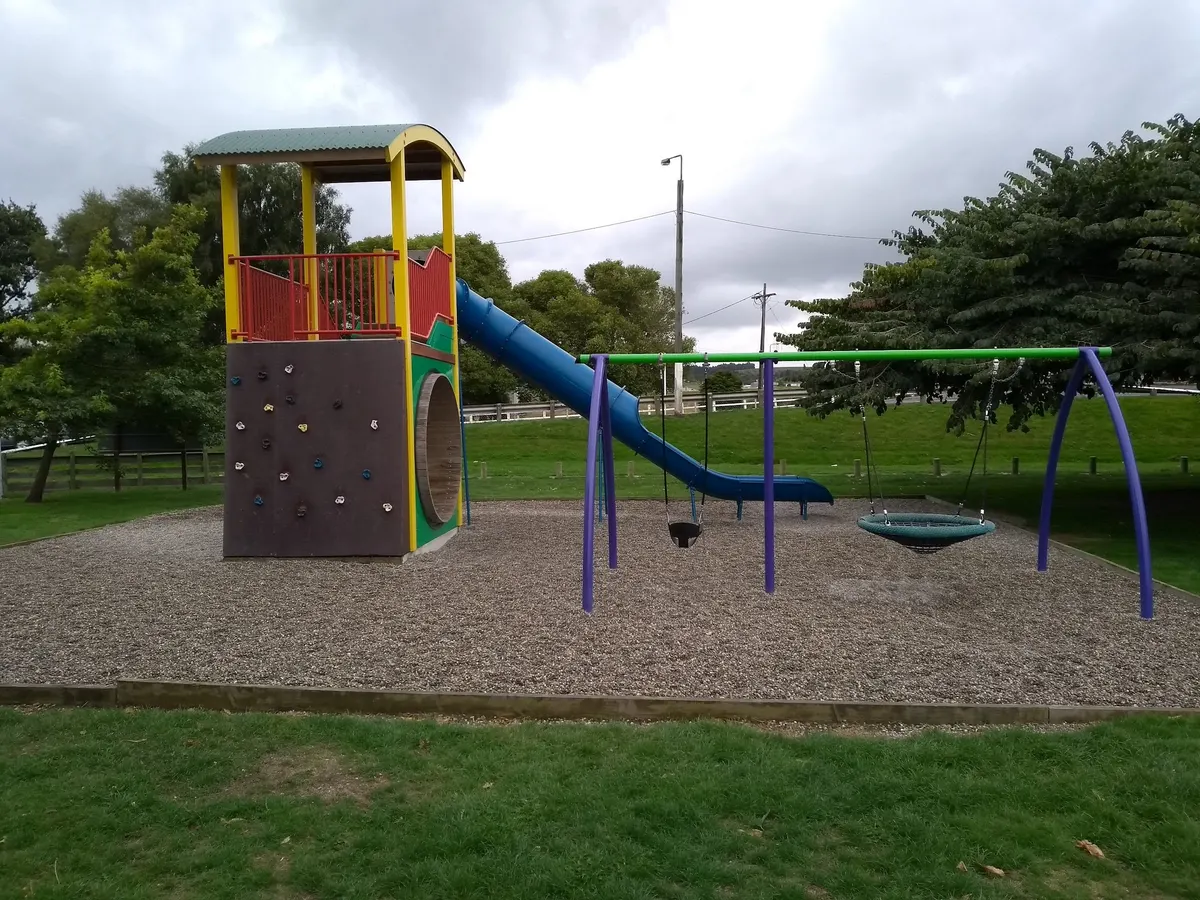 Photo: Martin V.Open on map