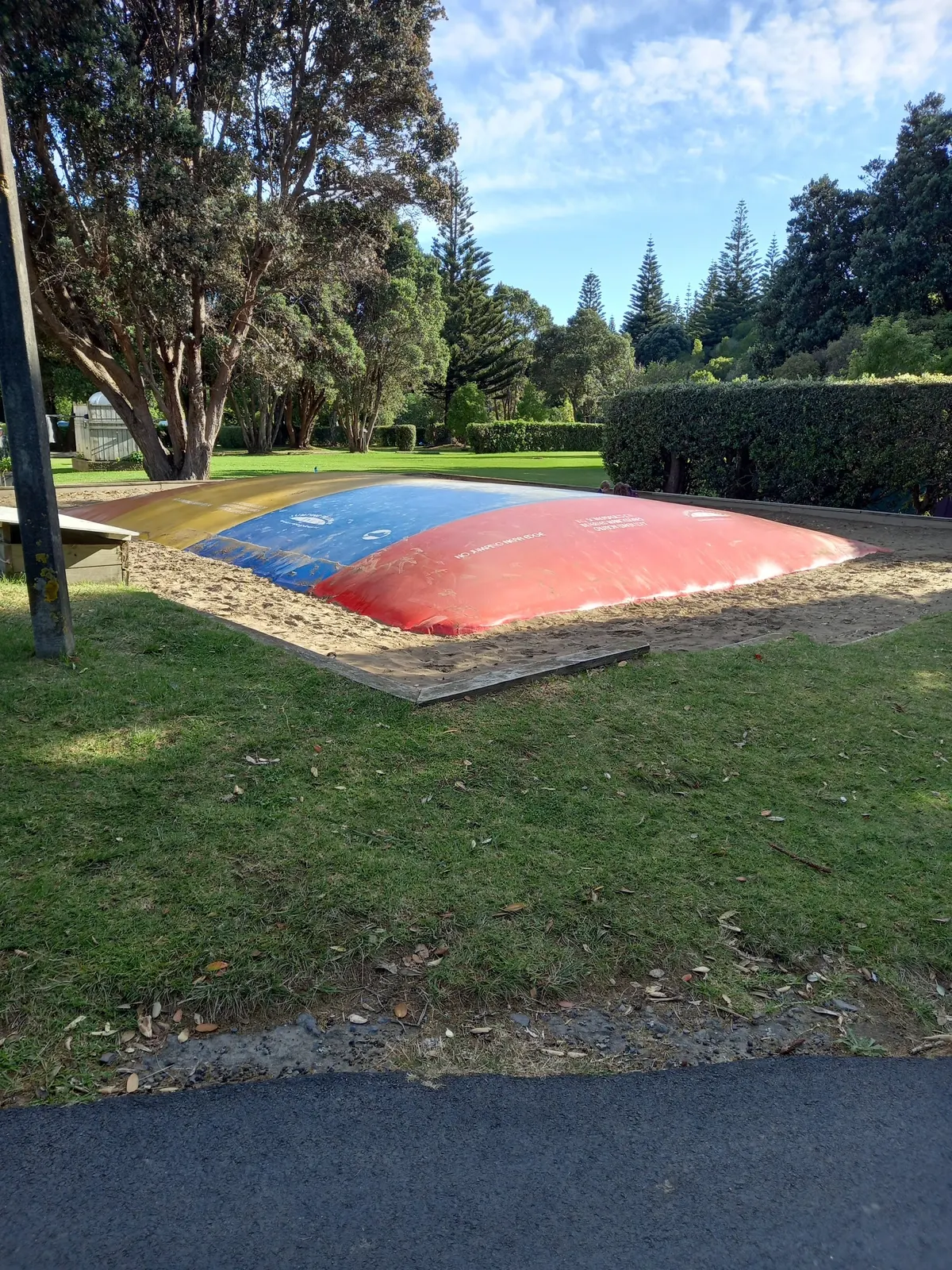
Great park, good facilities and toilets. Nice tram running from the entrance of the park to the other side near the beach part with views of Kapiti Island, operating from 11am till 4pm. Bikes and dog friendly, very spacious with different pathways at the centre to Paraparaumu (North) or Paekakariki (South). Plenty of parking around, taseal paths throughout.
Queen Elizabeth Park
Paraparaumu 5034
Access notes
The parks main sealed path is explicitly wide enough for wheelchairs, pushchairs and family bikes, and the play area sits near the same Mackays Crossing entrance, but the description gives no detail on the play equipment surface, parking, or any inclusive play pieces.
What's here
Queen Elizabeth Park is less a single playground than a whole coastal reserve built for a family day out, with play areas dotted near the Mackays Crossing entrance and a heritage tram that carries visitors on to the beach, making it suited to families who want to fill an afternoon rather than a quick swing stop.
Equipment
Access and Inclusion
History and Cultural
Practical Info
Good to know
HistoryAround 15,000 United States Marines of the 3rd Marine Division were stationed at Camps Russell, Mackay and Paekākāriki within what is now Queen Elizabeth Park between 1942 and 1944 before being sent into the Pacific theatre. An annual Memorial Day service is held at the US Marines Memorial at Mackays Crossing.
Source: nzherald.co.nzHistoryQueen Elizabeth Park (Kapiti Coast) was home to three military camps housing up to 20,000 US Marines near Mackays Crossing and Paekakariki Park entrances from June 1942 to November 1943 during World War II.
Source: nzherald.co.nzHistoryThe Maori history of Queen Elizabeth Park (Kapiti Coast) dates back hundreds of years, centred around Whareroa and Wainui villages, until European settler numbers grew in the 1830s and land was taken up by European farmers in the mid-1850s.
Source: nzherald.co.nzHistoryMore than 15,000 US Marines were stationed in and around Queen Elizabeth Park (Kapiti Coast) during World War II as part of a wider contingent spread across New Zealand, prompted by the growing threat of Japanese invasion. The encampment is sometimes called "the friendly invasion."
Source: nzherald.co.nzHistoryQueen Elizabeth Park near Paekakaariki housed three WWII US Marine Corps camps: Camp Russell (2nd Infantry Regiment), Camp Mackay (6th Infantry Regiment, now Whareroa Farm), and Camp Paekakariki. The first Marines arrived 4 June 1942.
Source: kapiticoast.govt.nzHistoryQueen Elizabeth Park on the Kapiti Coast is a 638-hectare regional park created in 1953, managed by Greater Wellington Regional Council. It contains the last natural dunes on the Kapiti Coast and includes the Wellington Tramway Museum.
Source: en.wikipedia.orgHistoryThe Yankee Trail in Queen Elizabeth Park (Kapiti Coast) is a 90-minute walking track that retraces the routes used by US Marines during their 1942-1944 encampment at the park. It is one of nine named tracks in the park.
Source: gw.govt.nzHistoryA sculpture memorial within Queen Elizabeth Park commemorates ten US Marines who died when a vessel sank offshore during their WWII training at the park's Camp MacKay and Camp Russell.
Source: en.wikipedia.orgHistoryThe park's Ramaroa visitor centre, which opened in 2017 near the Mackays Crossing entrance, was designed to echo both Māori wharenui and the tents and huts of the WWII US Marines camp that once stood on the site.
Source: en.wikipedia.orgCultureQueen Elizabeth Park in Paraparaumu was site of US Marine Corps camps during WWII (1942). Three camps (Russell, Mackay, Paekakāriki) housed over 20,000 Americans training for Pacific combat. Wellington Regional Council erected commemorative plaques and interpretation panels.
Source: kapiticoast.govt.nz
The week ahead
Daytime high in °C · % = chance of rain · data from yr.no
Photos (2)
Spot a problem?
Spotted broken gear, a hazard, or something that needs a fix? Let Kapiti Coast District know. They look after this park.